Blaming the Green Deal for rising energy prices is simple - but wrong


Blaming the Green Deal for rising energy prices is simple - but wrong
Opinion | S&D Group | Iratxe GARCÍA PÉREZ & Mohammed CHAHIM : They argue that rolling back the Green Deal would leave Europe weaker, and that accelerating the energy transition is the only credible path to affordability and sovereignty.
Published on
By

Iratxe GARCÍA PÉREZ
S&D President
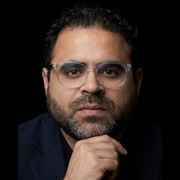
Mohammed CHAHIM
S&D VP for the Green Deal
As European energy ministers will meet on Monday to discuss Europe's new Energy Package, the continent faces a strategic choice. At a time of renewed geopolitical instability, with the illegal war in the Middle East that is shaking global energy markets, we must use the Green Deal to strengthen competitiveness, boost energy sovereignty and affordability, and lead in the industries of the future.
Politicians on the right and far-right have blamed the Green Deal for rising energy prices and weakening industrial competitiveness. The claim is simple and politically effective: climate policy is making Europe poorer. But it is wrong. In reality, the cheapest and most stable energy Europe can produce today is renewable.
In reality, the cheapest and most stable energy Europe can produce today is renewable.
Energy prices in Europe did surge dramatically over the years. But environmental regulation was not the culprit - quite the opposite.
First, prices rose due to the strong economic rebound after Covid-19. As lockdowns ended, global energy demand surged. Factories restarted, transport resumed and households increased consumption. Supply could not adjust overnight after production cuts during the pandemic and fragile supply chains. Prices rose everywhere, not only in Europe.
Second, Russia's war of aggression against Ukraine triggered a major energy shock. Over two decades, Europe had become heavily dependent on Russian fossil fuels. When Russia invaded Ukraine in 2022 and cut flows, prices spiked. This was the result of geopolitical risk and overdependence on a single supplier — a vulnerability built up over years.
Some argue, as the far-right AfD in Germany does, that Europe could simply "end the war" to lower energy bills.
But this turns the problem on its head: in fact the crisis was caused by Europe's dependence on Russian fossil fuels, not by its response to the invasion.
Third, and less often acknowledged, Europe has underinvested in its energy transition. Governments committed to reducing fossil fuel dependence but did not invest fast enough in renewables, grids, storage and efficiency. When crises hit, alternatives to imported fossil fuels prove insufficient. The problem is not that Europe is going too far on European energy policy, but that it is not moving fast enough. As Mario Draghi underlined in his landmark report on European competitiveness, Europe faces a massive investment gap, not excessive climate ambition.
The geopolitical chaos and resulting energy crisis thus strengthen the case for accelerating the transition. Renewable energy reduces exposure to imported fossil fuels and geopolitical volatility. Wind and solar power do not depend on unstable partners or autocrats and, once installed, generate electricity at very low cost. In fact, renewables are now the cheapest source of electricity. Investing in clean technologies also creates new industries, jobs, and export opportunities. The key challenge now is ensuring that Europe's transition is matched by stronger social fairness and industrial policy.
Turning back the clock would leave Europe weaker, more dependent on fossil fuels from autocrats, and less competitive in the global economy.
Social leasing, as demonstrated in France, allows lower- and middle-income families to access electric vehicles at affordable monthly rates. The clean transition cannot be reserved for the wealthy; broad access strengthens both fairness and industrial demand.
Spain's experience also shows that accelerating renewables can help stabilise prices and keep electricity more affordable. Thanks to a high share of renewable electricity and the temporary decoupling of gas prices from electricity generation, Spanish consumers have faced significantly lower price volatility than many others in Europe. This underlines how reducing dependence on fossil fuels and energy price decoupling can shield households from global energy shocks.
The Social Climate Fund is already in place to cushion the transition. Member states must use it fully and effectively to support households, renovate homes and help small businesses adapt. The tools exist — what is needed now is political will.
At the same time, Europe must do more for its industries.
The Industrial Accelerator Act can be a game changer, introducing the "Made in EU" principle to ensure that public spending strengthens Europe's own economy, supports decarbonisation and reinforces the competitiveness and resilience of European industry in a global race for clean and digital technologies.
It is also worth recalling that the existing Emissions Trading System is one of Europe's most effective policies, proving that climate ambition goes hand in hand with competitiveness and innovation. Removing or weakening this policy — as some suggest — would not lower the bill but shift the cost of pollution from polluters to taxpayers and discourage European industries from decarbonising and innovating.
Calls to roll back the Green Deal may be politically convenient, but turning back the clock would leave Europe weaker, more dependent on fossil fuels from autocrats, and less competitive in the global economy. At the same time, Europe must act swiftly to shield citizens from the immediate affordability crisis: gas prices have doubled as a result of the war in the Middle East, and the Commission needs to respond decisively and faster than it did when prices surged after Russia's invasion of Ukraine.
The real question now is whether Europe has the political courage to complete the transition and strengthen its energy sovereignty — faster, smarter and in a way that is fair and affordable.
Disclaimer
All opinions expressed in this column reflect the views of the author(s) and do not necessarily represent the views of EXPERT EUROPE or its editorial team.
Commentaires0
Veuillez vous connecter pour lire ou ajouter un commentaire
Articles suggérés