STOA Workshop: Enhanced EU cooperation on cybersecurity

Enhanced EU cooperation on cybersecurity
STOA Workshop
Live Stream
About the Workshop
As the world becomes more crisis-prone and less predictable, the EU is taking a more proactive approach to preparedness and comprehensive security instead of merely reacting to shock events. In the face of increasing threats, this preparedness requires a high level of trust — between Member States and EU institutions, and between public authorities, the private sector and civil society.
Member states seek to review existing tools to maximise effectiveness as the European Commission adopts the triple aim of defending democracy at home, in the European neighbourhood, and among its global democratic partners. The EC aims at building up new capabilities and 'structures' at the EU level to battle foreign interference through greater efforts to counter disinformation, cyber-attacks and external funding by building societal resilience and better enforcement of digital rules.
This STOA event provides support to the debate by examining how science and technology can meet the need of enhancing cooperation on cybersecurity at EU level, and exploring the technological feasibility of a future European Intelligence Body.
Programme
Speakers
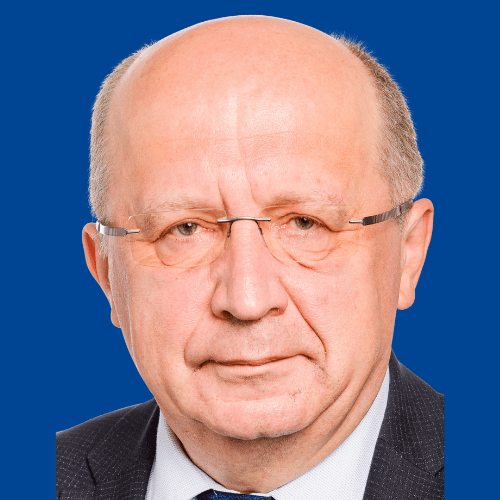
Andrius KUBILIUS
EU Commissioner for Defence and Space
European Commission


Andrius Kubilius is currently serving as the European Commissioner for Defence and Space in the Second von der Leyen Commission. He works closely with the High Representative and together with Member States on European defence.
His task is to help ensure that when it comes to defence, Europe spends more, spends better and spends European. In parallel, he oversees Europe's space portfolio, reflecting the increasingly contested nature of space and the links with our overall security and defence.
His responsibilities include addressing the EU's vulnerabilities to cyber and hybrid attacks and build up our resilience and capacity to counter them.
He previously served as a Member of the European Parliament (MEP) from 2019 to 2024 and as Prime Minister of Lithuania from 1999 to 2000 and again from 2008 to 2012. He was the leader of the conservative political party "Homeland Union" from 2003 to 2015, which he continues to be a member of. He has a degree in Physics.
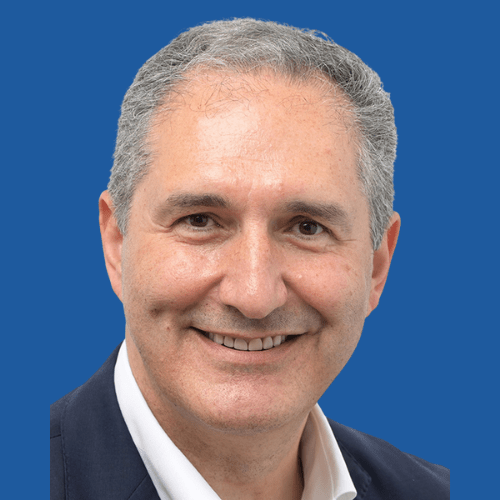



José Cepeda is a Spanish politician of the Spanish Socialist Workers' Party who was elected member of the European Parliament in 2024.
He is vice-chair of the Delegation for relations with the countries of Central America, co-president of the Working Group on Hybrid Threats and Security of the Eurolat Parliamentary Assembly and Member of the SEDE, IMCO, JURI and CONT committees.
He previously served as a member of the Assembly of Madrid, and as senator of Spain, vice president of the Inter-Parliamentary Union, and member of the Council of Europe.
He has a PhD & MSc in Communication and has been University lecturer at the University of La Rioja and at Carlos III University of Madrid.
Committees
Delegations

Gary Steri is a project manager and researcher at the Cybersecurity and Digital Technologies Unit of the European Commission Joint Research Centre (JRC).
Holding a PhD in Computer Science, he has authored over 50 publications, including scientific papers, technical and policy reports. His research covers security of network and communication protocols, mobile devices and IT infrastructures.
Currently he leads a research activity on the use of large language models to enhance cyber threat intelligence operations. Gary plays a key role in the implementation of several EU cybersecurity policies, from the establishment of the Cybersecurity Competence Community to the development of the European Cybersecurity Alert System, bridging scientific research with strategic policy execution.
He is member of international working groups for the security of electronic travel documents.
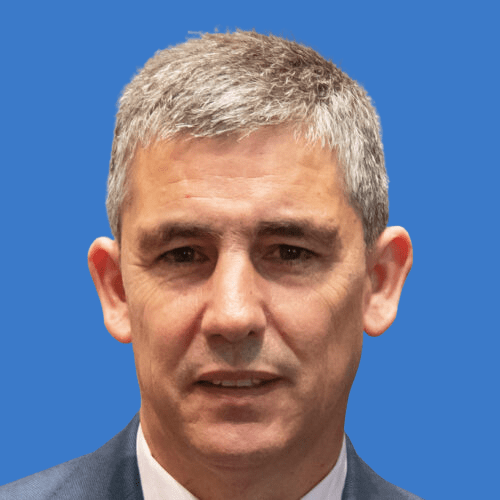
Colonel of Artillery. Industrial Engineer specializing in electronics and automation. Cryptology specialist. Mr. Candau has several certifications of expertise in ICT security. He has more than twenty years of experience in cybersecurity.
The main tasks of his department are to train the administration's security specialists, to develop CCN policies, guidelines and reports (CCN-STIC series and CCN-CERT reports), to develop cybersecurity tools in support of the public sector, to supervise system accreditation and to undertake security audits.

Daniel Markić has been serving as the Director of the European Union Intelligence and Situation Centre (EU INTCEN) since September 2024.
Previously, Mr Markić served as the Director of the Croatian Security-Intelligence Agency (SOA) from 2016 to 2024. Mr Markić started his career in 1991 in the special operations unit of the Croatian Armed Forces with the rank of Major before joining the Croatian Intelligence Service in 1995, working in operations.
In 2001, he turned to diplomacy, assuming the post of First Secretary in the Croatian Permanent Mission to the EU. In 2005, he continued his career in the intelligence community and headed various units in operations, education, and international cooperation in the Security-Intelligence Agency until 2016, when he became the Director of the Agency.

Florian Pennings recently rejoined ENISA as Associate COO to help the Agency achieve further impact. Before rejoining, he worked as Director EU Cybersecurity Policy at Microsoft and in national and European government cyber and security agencies.
He strategically coordinates impactful cooperation between industry and public stakeholders. He actively contributed to national, EU and global cybersecurity policy discussions, set up international cooperation frameworks, and was active in operations.

Francesca Musiani is a research director (eq. senior researcher or research professor) at the National Center for Scientific Research, France (CNRS). She holds a PhD in socio-economics of innovation (MINES ParisTech, 2012) and a Habilitation to supervise doctoral research in sociology (Sciences Po Paris, 2022).
She is the co-founder and current director of Centre Internet et Société of CNRS. Since 2022, she has been a member of the Scientific Council of ANSSI (the French National Agency for Cybersecurity); since 2024, she advises the Predictive Cyberlab.
In 2023, Francesca was the recipient of the Woman Cyber Researcher Award from CEFCYS (the French Circle of women in cybersecurity).
For STOA and the European Parliament, Francesca has previously coordinated a report on Internet fragmentation.



Staff