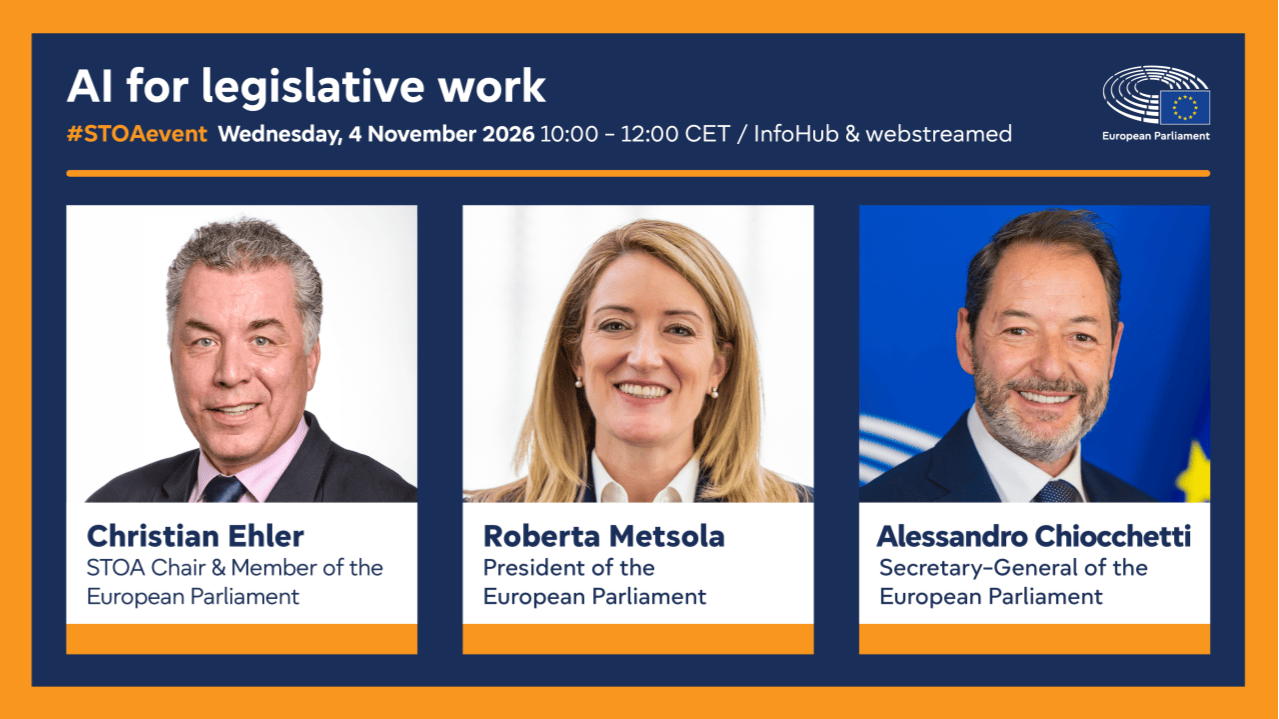
STOA workshop: AI for legislative work
Live Stream
About the Event
Artificial intelligence (AI) should never replace democratic decision making, however, AI can be used to help legislators and their staff make legislation clearer, better targeted at the desired outcomes, easier to implement.
Many parliaments have explored applications of AI – generative or otherwise – to different stages of the legislative cycle.
Two studies, commissioned by the STOA Panel earlier this year, provided an extensive overview of such applications across a spectrum of “better regulation” ranging from citizen engagement and identifying gaps and overlaps, through drafting, amending and evaluating legislation.
The European Parliament has already invested considerable effort into providing digital tools, including those with AI-inside, to help MEPs and staff in their legislative work.
The Parliament continues to look for ways in which AI can be used to provide quality support to legislative work.
This event presents some concrete use-cases of AI for legislative work, their pros and cons as well as the governance and other practical issues they raise.
Speakers
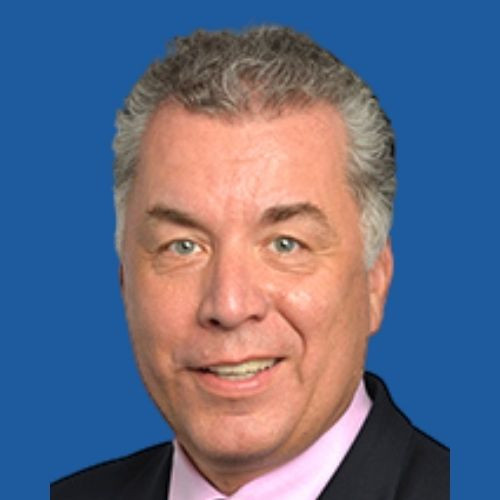


 MEP
 Malta
European Parliament President




Delegations

Alessandro CHIOCCHETTI
Secretary-General
European Parliament
Alessandro Chiocchetti was born on 4 November 1968 in Moena, Italy. He received a degree in Political Science and International Law from the University of Padua, as well as a Postgraduate Diploma in International Law, Economics, History and European Integration from the University of Padua in cooperation with the Italian Ministry of Foreign Affairs.
Alessandro Chiocchetti serves as Secretary-General of the European Parliament since 2023. Prior to his appointment, he served as Head of Cabinet to the President of the European Parliament, Roberta Metsola.

Monica PALMIRANI
Full Professor of Computer Science and Law
University of Bologna
Monica Palmirani, Full professor of Computer Science and Law at Bologna University, School of Law, Italy. Graduated in Mathematic, Ph.D. in Legal Informatics and IT Law, teacher of several courses since 2001 on Legal Informatics, eGovernment, Legal drafting techniques, and Legal XML.
She is member of CIRSFID part of the Alma-AI, one of the main centers of excellence in Italy and one of the leading centers at the international level for the area of computer science and law.
She was project manager and coordinator of several European projects: COMPULAW, INTERLEX, DECODE, ManyLaws, ICT4LAW, Estrella, SEAL, TRIAS on behalf of CIRSFID.
From 1996 to 2001 she was responsible of the “European Project Department” of Gruppo Fromula and coordinated several EUProject: BAPTISME; FLUENT; WHALES; APM; LORE; ALIVE; EXPIDE.
She is the Director of Ph.D. International Program Erasmus Mundus Law, Science and Technology, coordinator of the eGov module in the Master in the Law of New technologies, Director of the Summer School Legislative XML organized by the University of Bologna, with the goal of disseminating the usage of Legal XML in the public agencies, respecting and guaranteeing the legal principles embedded in the legal document form.
Emmanuel CORTES
Head of the Centre for Legislative Production Support
Direction de l'information légale et administrative (DILA)
France
Emmanuel Cortes currently heads the Regulatory Drafting Support Centre (CAPNOR) at the Directorate of Legal and Administrative Information (DILA), under the French Prime Minister's Office.
With over 20 years of professional experience, he has developed extensive expertise in digital transformation, project management and leading multidisciplinary teams.
In his current role, he oversees the development and modernisation of digital tools supporting legislative and regulatory processes, including ÉDILE, a structured legislative and regulatory drafting tool, and SIGNALE, an AI-enhanced platform for managing parliamentary amendments.
Veera HEINONEN
Head of European Union Affairs
Sitra
Finland
Veera Heinonen has a long career in societal change work at Sitra and in foreign and security policy at both the Ministry for Foreign Affairs and the Office of the President of the Republic.
Before her civil service career and stints in diplomacy, Heinonen worked in various journalistic roles, including as a correspondent in London.
Veera Heinonen began as Sitra’s new Head of European Union Affairs in Brussels on 1 October 2026. She will be responsible for strengthening Sitra’s EU cooperation and partnerships.
Many decisions central to Finland’s future are prepared and made in Brussels, and Sitra aims to be present where the direction of the European Union is shaped.
Veera Heinonen moves to the role from her position as Director of Sitra’s Foresight and Training function. Her expertise strengthens Sitra’s ability to identify EU-level developments, build partnerships, and bring Finnish future-oriented thinking into European cooperation.
The aim of the role is to provide input from Sitra’s foresight and innovation work to the EU’s renewal agenda.
Thomas HEMMELGARN
Head of Unit
EU Policy Lab: Foresight
Design & Behavioural Insights (JRC.S.1)
Joint Research Centre
European Commission
Thomas Hemmelgarn has been leading the EU Policy Lab at the European Commission's Joint Research Centre (JRC) since 2021.
The EU Policy Lab is a space for cross-disciplinary exploration and innovation in policymaking and applies collaborative, systemic and forward-looking approaches to help bringing scientific knowledge into EU policymaking. It brings together teams with expertise on foresight, design and behavioural insights.
He holds also the position of Deputy Director for Innovation in Science and Policymaking at the JRC.
Thomas started his career in the German Ministry of Finance and later joined the European Commission.
In the Commission, he worked on various policies related to taxes and economics. He then became the leader of the Economic Analysis team for Taxation. After that, he joined the team of the Director-General for Taxation and Customs Union and later worked in the office of the SecretaryGeneral of the European Commission.
Thomas is an economist by training and studied at the University of Cologne, the Pennsylvania State University and Bocconi University. He holds a Doctorate in Economics from the University of Cologne and a Master in International Management from the Community of European Management Schools (CEMS).
Daniel NIGOHOSYAN
Managing Partner and co-founder
Rel-I
Daniel is a seasoned expert in monitoring, evaluation, and impact assessment, with extensive experience of over 20 years in EU and national projects.
Over his career, Daniel has held key positions at institutions such as Ecorys, where he led the Better Regulation team in Brussels, and Sofia University, leading and managing multidisciplinary project teams.
His work spans a broad spectrum of areas, focusing on Better Regulation. His portfolio includes leadership roles in projects for major European institutions like the European Commission, the European Parliament, the European Investment Bank, the Financial Mechanism Office (FMO), as well as for national governments and agencies.
He specialises in designing and implementing evaluations of policies, legislation, and programmes, impact assessments, indicator systems, methodologies like counterfactual techniques, and tools for quantifying costs and benefits.
Daniel has also provided several training sessions on M&E, and quantification for various clients, including the Commission.
In his recent work, he has always sought opportunities to use AI in responsible ways.
In addition to his consultancy work, Daniel has contributed to academia as an assistant professor, publishing extensively on topics such as EU grants, energy efficiency, and programme design.
Programme



Important – This event is by invitation, and only registered participants will be admitted. Due to capacity constraints, all attendees must register, including those already holding a European Parliament access badge. Registration is mandatory for admission.

Staff
European Parliament
60, rue Wiertz 1047 BRUSSEL