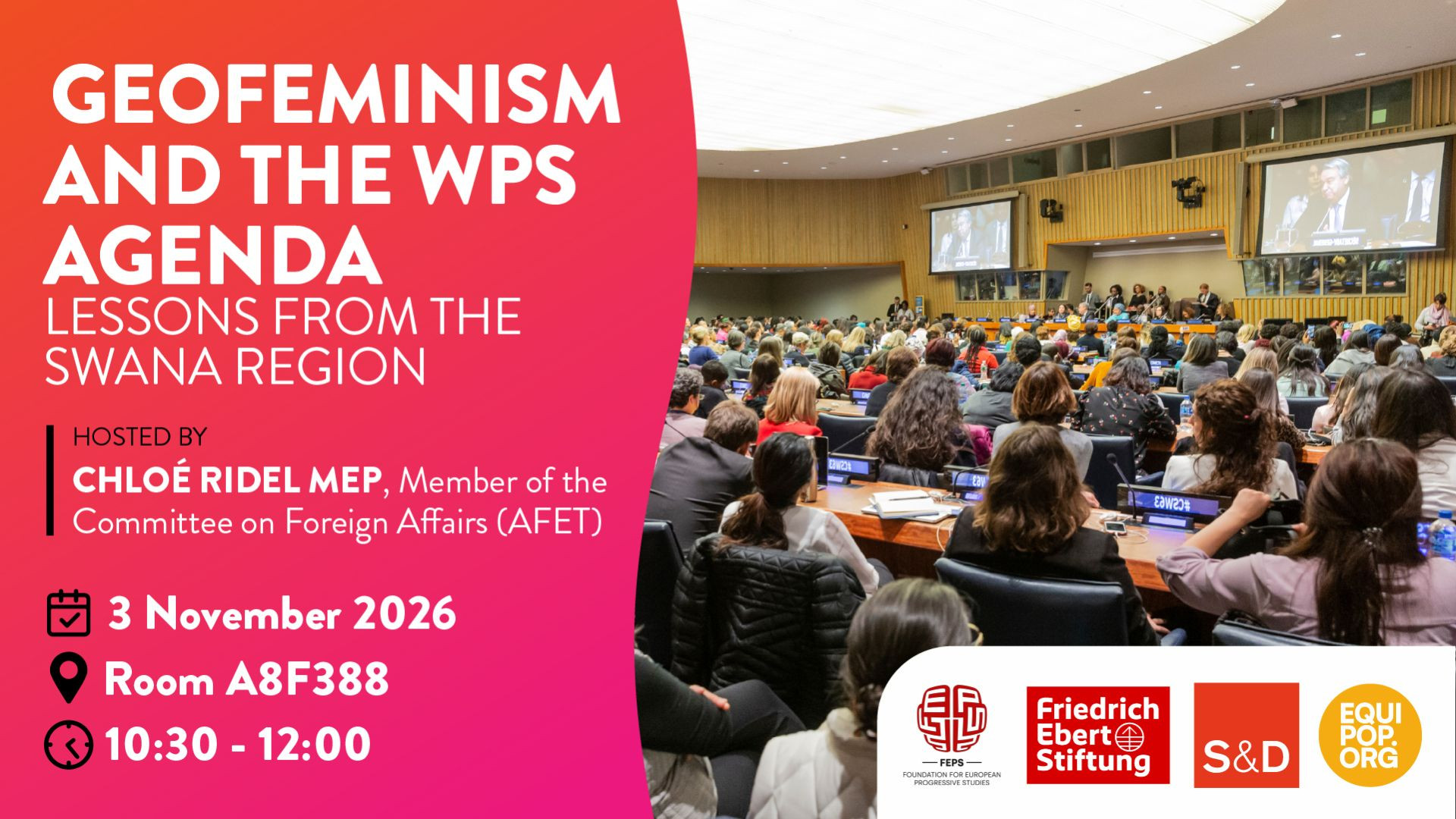
Geofeminism and the WPS Agenda : Lessons from the SWANA region


About the Event
Power is not gender-neutral. Building a more peaceful and stable world requires challenging the inequalities that shape international relations.
Women are disproportionately affected by conflict, yet they continue to be largely excluded from the negotiating table and discussions about peace and security. Research shows that women's participation increases the likelihood of lasting peace. Transforming our approach to international relations through principles of equality is at the heart of geofeminism.
Next year, the EU plans to launch a new Action Plan on Women, Peace and Security (WPS), and a stronger commitment is urgently needed. As threats from far-right governments increase and funding for women's organisations diminishes, we must demonstrate that women's voices are crucial in every geopolitical context.
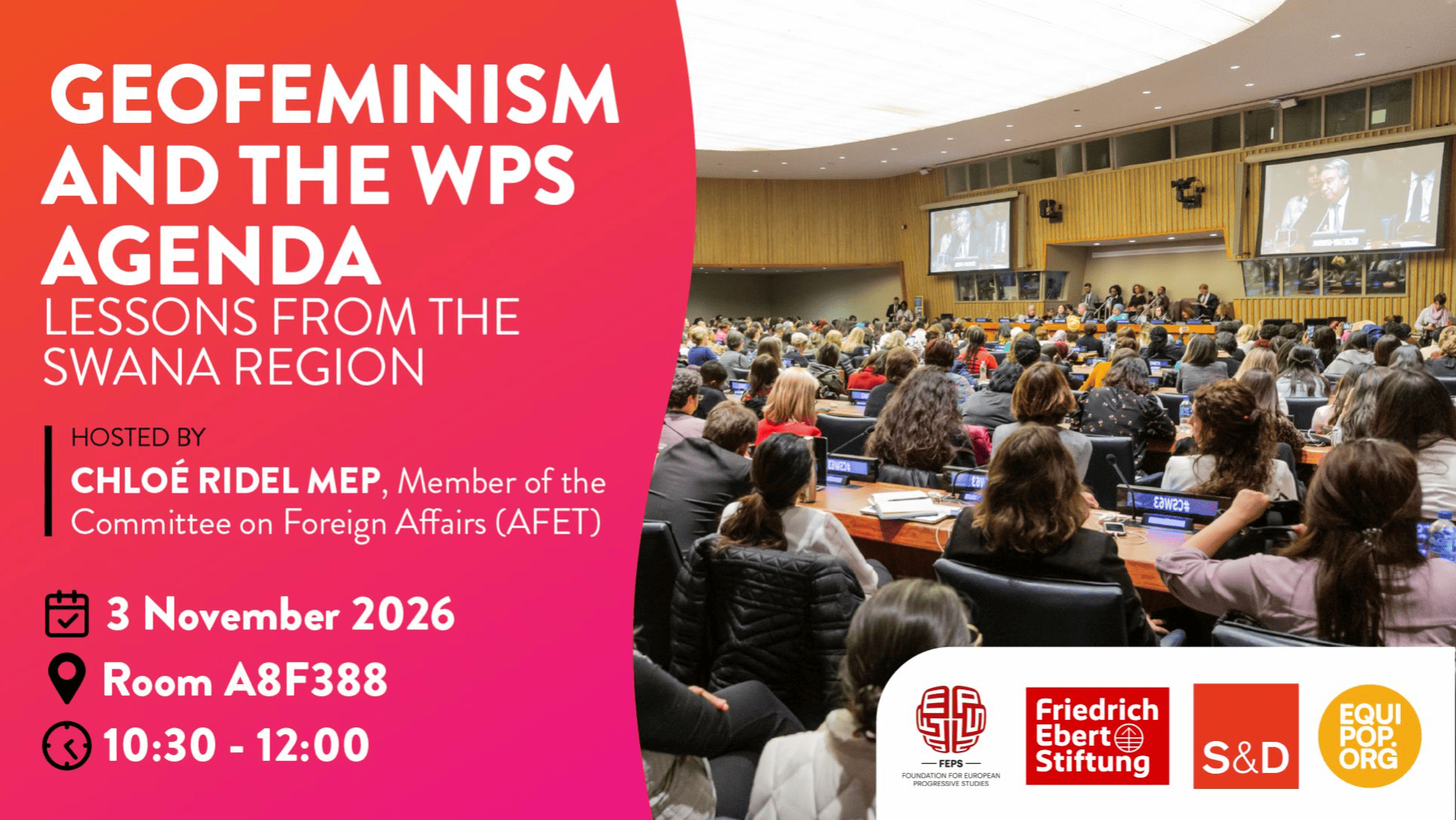
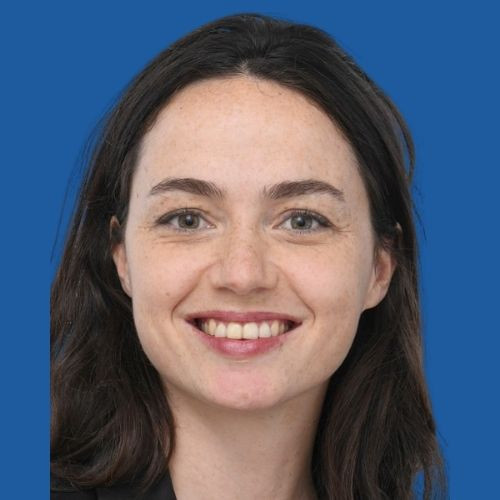
During the European Parliament’s Gender Equality Week, the roundtable discussion “Geofeminism and the WPS Agenda: Lessons from the SWANA region (South-West Asia and North Africa)” will be chaired by MEP Chloé Ridel and organised by FEPS in collaboration with the S&D Group, the Friedrich-Ebert-Stiftung and Equipop.
Through a women-centred geopolitical lens, speakers will address the rising violence and violations of international law in South-West Asia and North Africa. They will propose alternative policies aligned with the Women, Peace, and Security (WPS) agenda and discuss how the EU can promote inclusive peace. Ensuring women's participation in all policymaking is not only a fundamental right but also one of the most effective ways to prevent conflicts in the twenty-first century.
Hosted by
 MEP
 France
Member of the European Parliament
 Group of the Progressive Alliance of Socialists and Democrats in the European Parliament |
 Parti socialiste



Speakers

Ann LINDE
Special Advisor on Foreign Affairs
Co-Chair of the FEPS-FES FFP Progressive Voices Collective
Foundation for European Progressive Studies (FEPS)
Ann Linde is Special Advisor on Foreign Affairs at the Foundation for European Progressive Studies (FEPS) and Co-Chair of the Feminist Foreign Policy Progressive Voices Collective.
She served as Sweden’s Minister for Foreign Affairs from 2019 to 2022 and as OSCE Chairperson-in-Office in 2021, following earlier ministerial responsibilities for EU affairs and trade.
Lina ABOU-HABIB
Director of the Asfari Institute for Civil Society and Citizenship
American University of Beirut
Lina Abou-Habib is Director of the Asfari Institute for Civil Society and Citizenship at the American University of Beirut.
Her work focuses on gender equality, citizenship rights and the integration of gender perspectives into development policies. She previously led the Collective for Research and Training on Development–Action and Women's Learning Partnership.
Hania BITAR
Director General
Palestinian Youth Association for Leadership and Rights Activation (PYALARA)
Hania Bitar is Director General of the Palestinian Youth Association for Leadership and Rights Activation (PYALARA), which she founded in 1999.
Her work focuses on Palestinian youth participation, rights and media literacy. Under her leadership, PYALARA has developed programmes in youth media, community engagement and psychosocial support.
Julia Koch-De BIOLLEY
Head of the EEAS Taskforce for Equality
Acting Ambassador for Equality
European External Action Service (EEAS)
Julia Koch-de Biolley is Head of the Task Force for Equality at the European External Action Service (EEAS) and Acting Ambassador for Equality.
Her work concerns equality and non-discrimination in EU external action. Her previous positions include Deputy Head of EU Delegation in Lebanon and in the West Bank and Gaza, alongside experience in humanitarian crisis response.
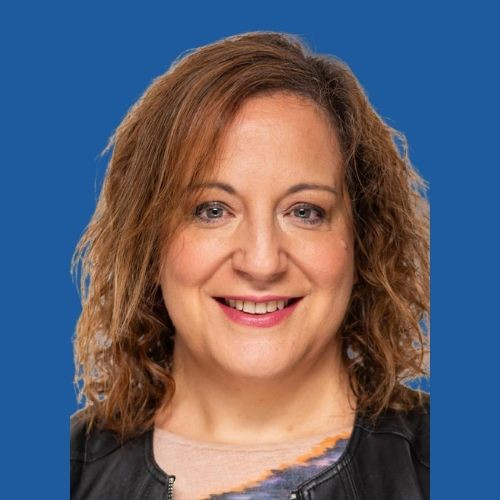
Shada ISLAM
Advisor and Analyst on Europe
Geopolitics and Inclusion
Moderator
New Horizons Project
Shada Islam is an independent advisor and analyst on European affairs, geopolitics and inclusion, and founder of the Brussels-based New Horizons Project.
She also serves as Senior Adviser on Asia, Africa and international trade at the European Policy Centre. Previously, she was Director of Europe and Geopolitics at Friends of Europe.


Programme
Important – This event is by invitation, and only registered participants will be admitted. Due to capacity constraints, all attendees must register, including those already holding a European Parliament access badge. Registration is mandatory for admission.
Staff
European Parliament
60, rue Wiertz 1047 BRUSSEL
Bildergalerie1